Firearms Evolution in American History
The story of firearms in North America moves from simple ignition mechanisms to complex, mass-produced arms that reshaped society, warfare, law, and industry. Early matchlocks and arquebuses gave way to flintlocks, then rifled long guns, percussion systems, and finally repeating and automatic weapons that defined military and civilian life. Key innovators such as Samuel Colt transformed a mechanical idea into a commercial product that accelerated westward expansion and industrial manufacturing.
Early ignition systems to rifled accuracy
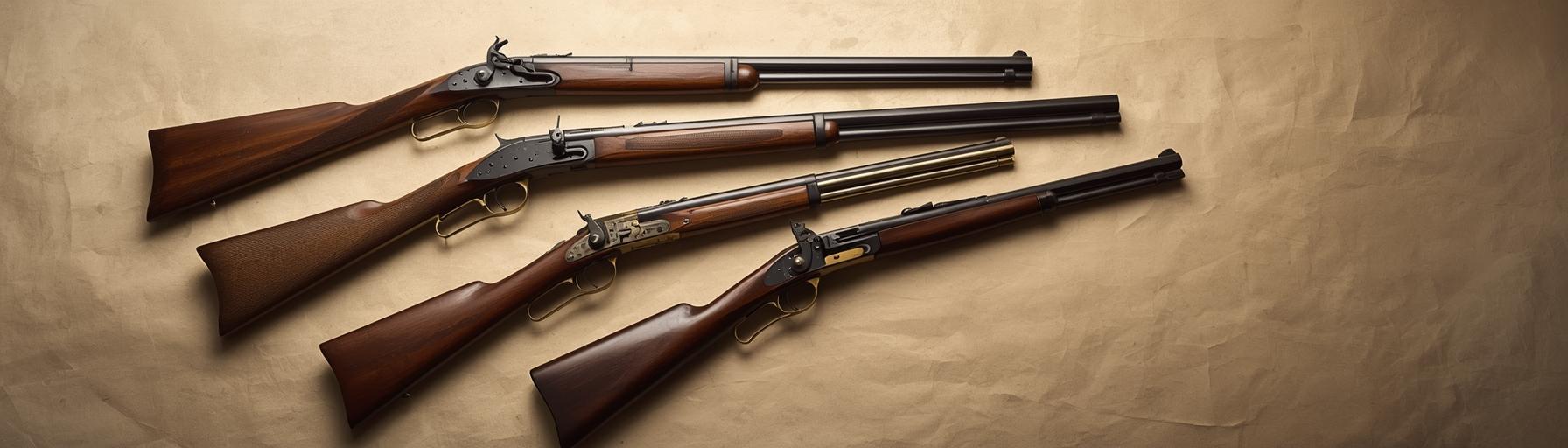
Colonial militias relied on matchlocks and arquebuses in the 17th century, but by the 18th century flintlock technology dominated. Flintlocks offered faster, more reliable ignition and became standard for both British regulars and American militias during the Revolutionary War. The transition to rifled bores in the 18th and early 19th centuries improved accuracy dramatically. Skilled craftsmen in Pennsylvania and Virginia produced long rifles with grooves cut into the bore, stabilizing the round and allowing aimed shots at several hundred yards. These long rifles were private purchases rather than government issue and became emblematic of frontier marksmanship and civilian gun culture in the Early Republic.
Civilian arms, Colt’s revolver, and manufacturing change
Civilian firearm culture in the early 1800s emphasized hunting, self-defense, and local militia duties. Most private arms were single-shot muskets or rifles. Samuel Colt’s innovation altered that equilibrium. Colt received a United States patent for a revolving firearm in 1836 and commercialized a design that allowed multiple shots without reloading the barrel. By the 1840s and 1850s Colt’s factories in Hartford implemented assembly techniques, standardized parts, and advertising strategies that made the revolver a mass-market item. Patent litigation followed; Colt defended his rights vigorously, winning decisions that secured market dominance for his firm and spurred competitors to refine alternate mechanisms. The revolver’s portability and rapid-fire capability made it influential in westward migration, offering settlers and lawmen a compact defense tool on remote trails and frontier towns.
Mid-19th century innovations and a comparative timeline
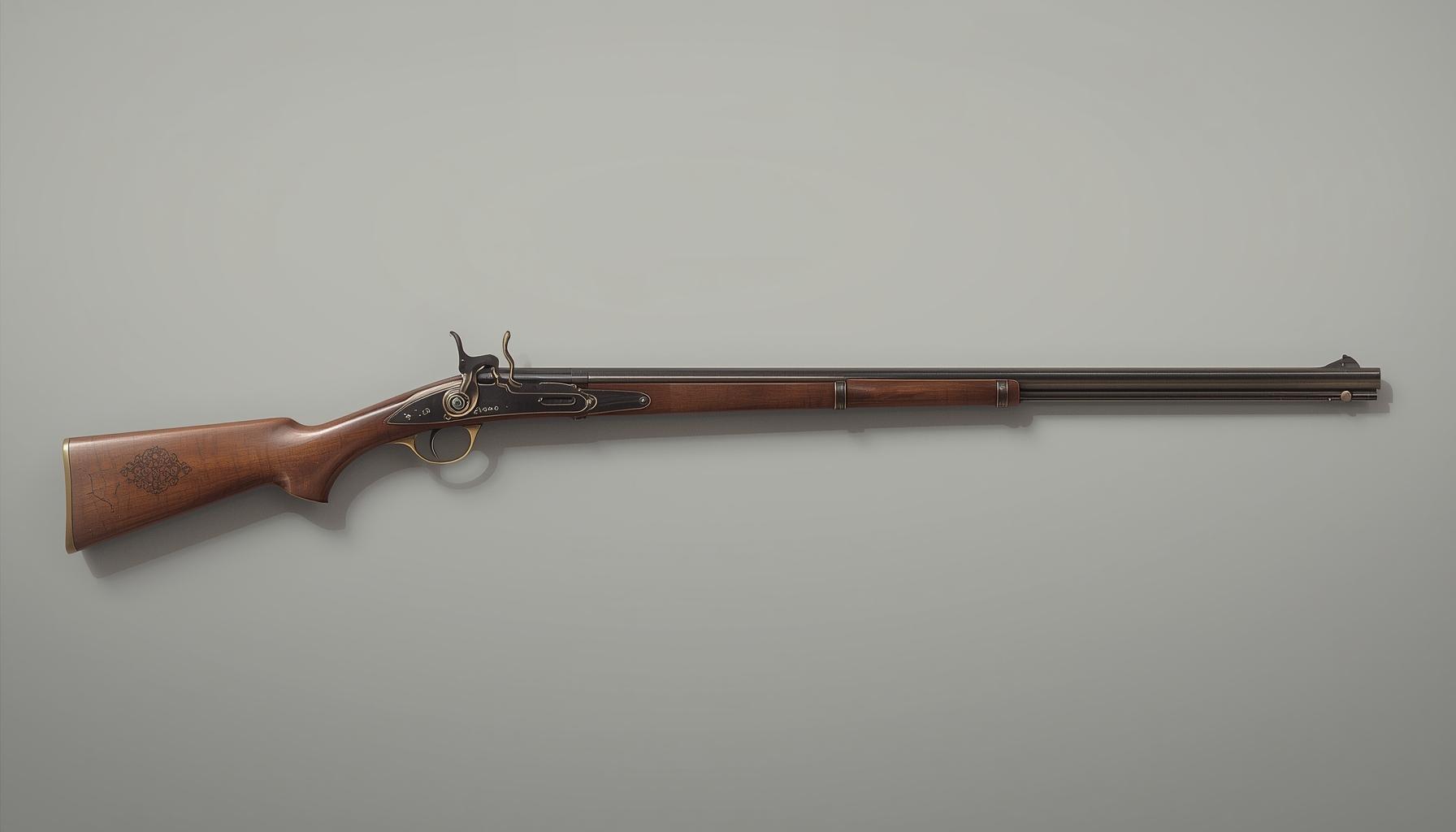
Breech-loading designs and metallic cartridges began to replace muzzleloaders before the Civil War. The war itself accelerated change: armies demanded interchangeable parts, standardized calibers, and industrial-scale production. Repeating arms such as the Henry and later Winchester lever-actions emerged in the 1860s, giving soldiers and civilians unprecedented rates of fire. The following extract contrasts pivotal firearms, years of introduction, mechanisms, and impact on American society and warfare.
| Firearm model and type | Year introduced (first widespread) | Mechanism and cartridge | Principal manufacturer or developer | Broad impact on use and deployment |
|---|---|---|---|---|
| Flintlock musket | early 1700s (widespread) | Flint ignition, smoothbore ball | Various colonial gunsmiths | Standard infantry arm for colonial conflicts |
| Pennsylvania long rifle | 1700s–early 1800s | Rifled barrel, muzzleload ball | Pennsylvania craftsmen | Enhanced civilian marksmanship for hunting and skirmishing |
| Colt revolver (patented) | 1836 | Rotating cylinder, percussion caps | Colt’s firm, Hartford | Portable multiple shots, commercial mass production model |
| Breech-loading rifle | 1850s–1860s | Single-shot breech with metallic cartridge | Various innovators (Sharps, Spencer) | Faster reloading, used by cavalry and sharpshooters |
| Henry lever-action | 1860 | Lever-action tubular magazine, rimfire | B. H. Henry / New Haven Arms | Repeating fire for both military and frontier civilians |
| Winchester Model 1873 | 1873 | Lever-action, centerfire | Winchester Repeating Arms | Iconic “rifle that won the West” for settlers and lawmen |
| Smokeless cartridge arms | 1880s–1890s | Smokeless powder, small-caliber high-velocity | European and US firms | Cleaner firing, higher velocity, modern cartridges |
| Bolt-action service rifles | 1890s–1910s | Bolt mechanism, smokeless cartridges | Mauser designs; US Springfield | Standardized military arms for global conflicts |
| M1 Garand (semi-auto rifle) | 1936 (adopted US 1936) | Semi-automatic, en-bloc clip | John Garand / US government | Increased firepower for infantry in WWII |
| AR-15 / M16 family | 1950s–1960s | Gas-operated, selective fire, 5.56mm | ArmaLite, Colt (manufacture) | Lightweight service rifle in Vietnam era and beyond |
After the Civil War, repeating lever-actions became widely available to civilians and law enforcement. The shift from loose powder and ball to fixed metallic cartridges in the late 19th century enabled breech-loading repeaters and simplified logistics for military units.
20th century transformations: mass production, semi-automatic pistols, social impacts
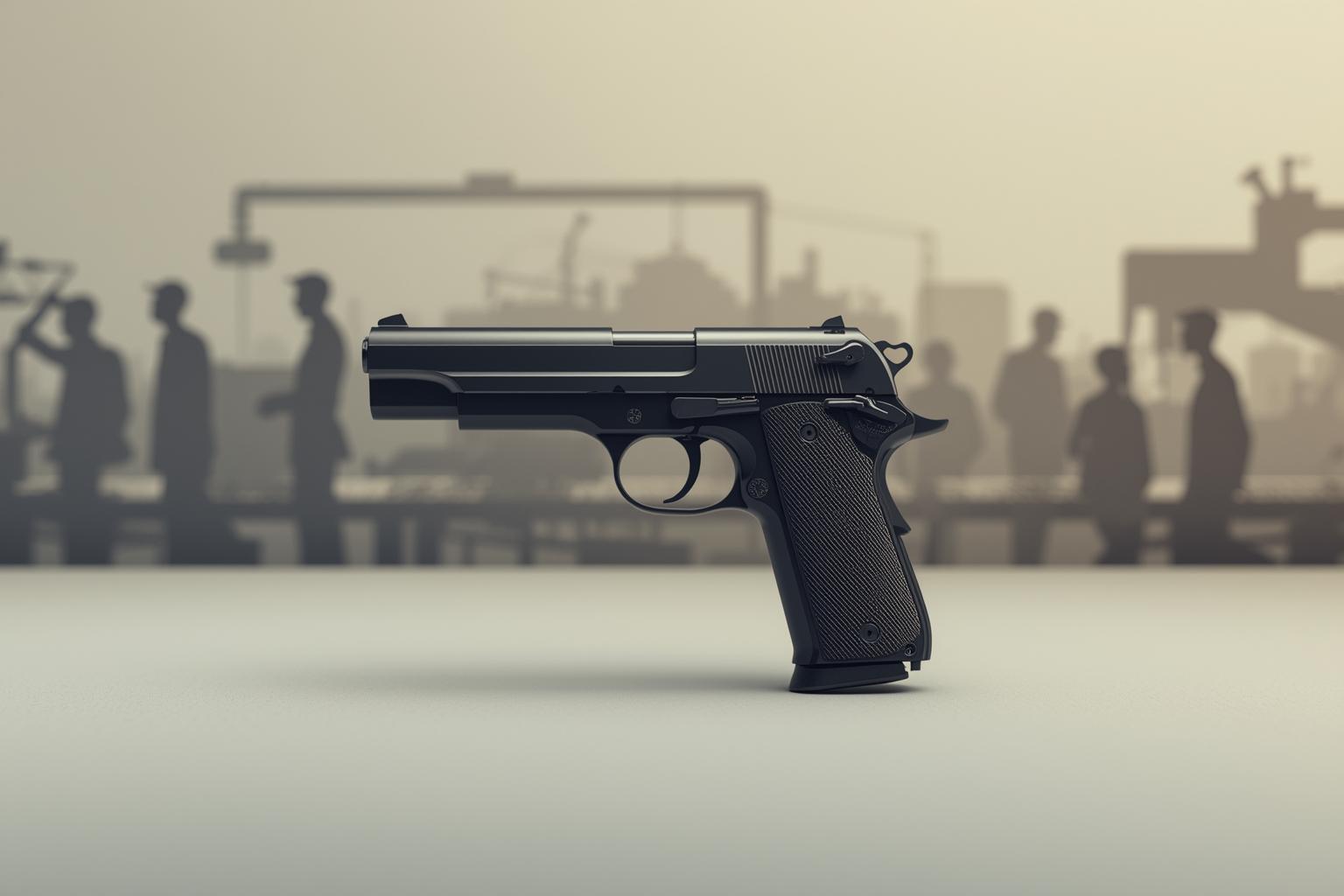
Adoption of smokeless powder and small-caliber, high-velocity cartridges around the turn of the century led to bolt-action service rifles globally. World War I and World War II emphasized industrial capacity: the M1 Garand became the first widely issued semi-automatic service rifle, and submachine guns such as the Thompson appeared in both military and criminal contexts. During Prohibition (1920–1933), the Thompson gained notoriety through gangster use, shaping public perception of firearms as instruments of organized crime. Postwar prosperity expanded civilian markets for hunting and sport shooting, with manufacturers catering to a growing recreational sector.
The AR-15 platform, derived from ArmaLite’s 1950s design and popularized by Colt, became central to debates during and after the Vietnam War. Its light weight and high-capacity magazines changed tactical doctrines and public discourse about modern rifles. Law enforcement gradually upgraded from revolvers to semi-automatic pistols and adopted patrol rifles in response to threats requiring greater firepower.
Regulation, culture, museums, and future trends
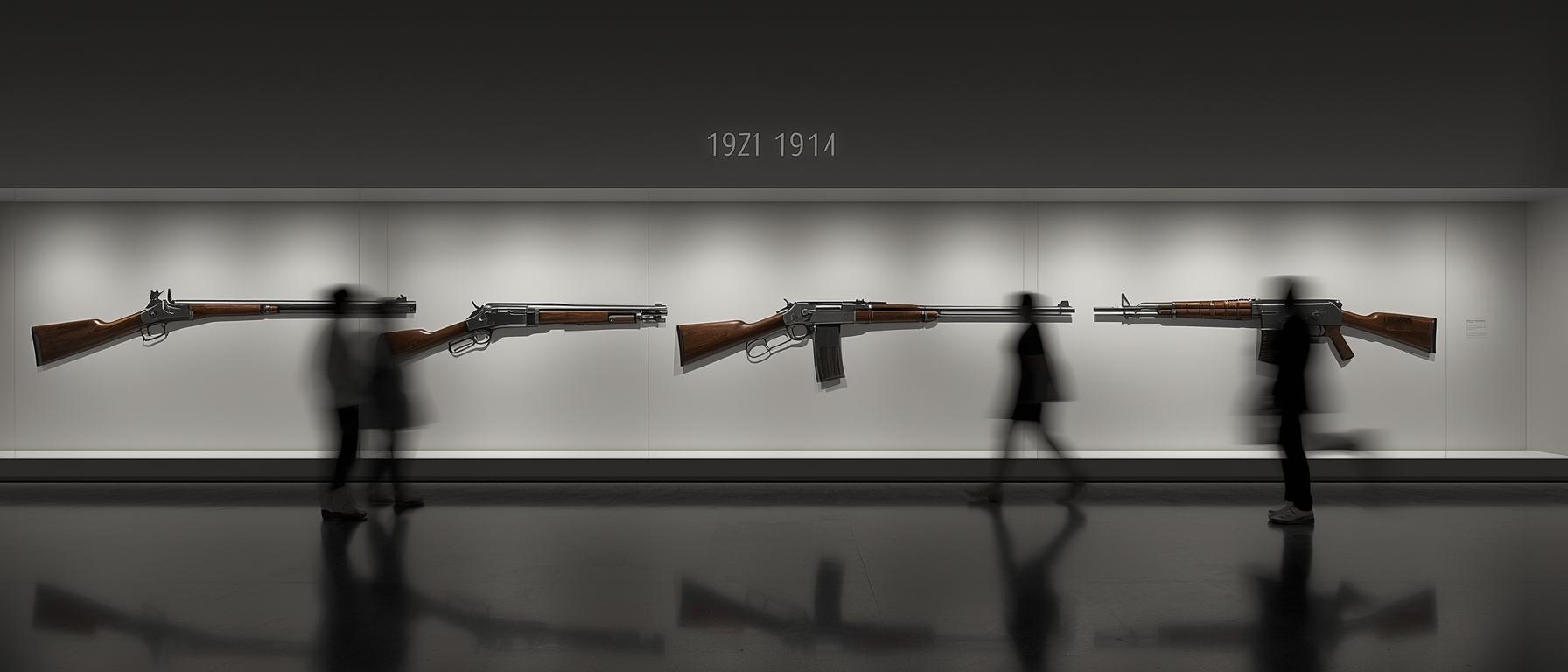
Legal milestones include the Second Amendment (1791), the National Firearms Act of 1934 regulating certain classes of weapons, the Gun Control Act of 1968 that set modern federal licensing and import rules, and the Brady Handgun Violence Prevention Act of 1993 establishing background checks for certain purchases. Public opinion and media coverage influence policy cycles; high-profile incidents spur legislative and administrative responses. Preservation efforts maintain historical artifacts: Colt’s historic complex in Hartford remains a focal point for study, the National Firearms Museum holds extensive collections, and the Smithsonian Institution preserves representative arms tied to national narratives. Contemporary debates focus on technological trends such as advanced materials, electronic sights, modular platforms, and smart-gun concepts, as well as industry consolidation and international trade in small arms. Ongoing tension between cultural traditions, public safety, and innovation will continue to shape the presence of firearms in American life.